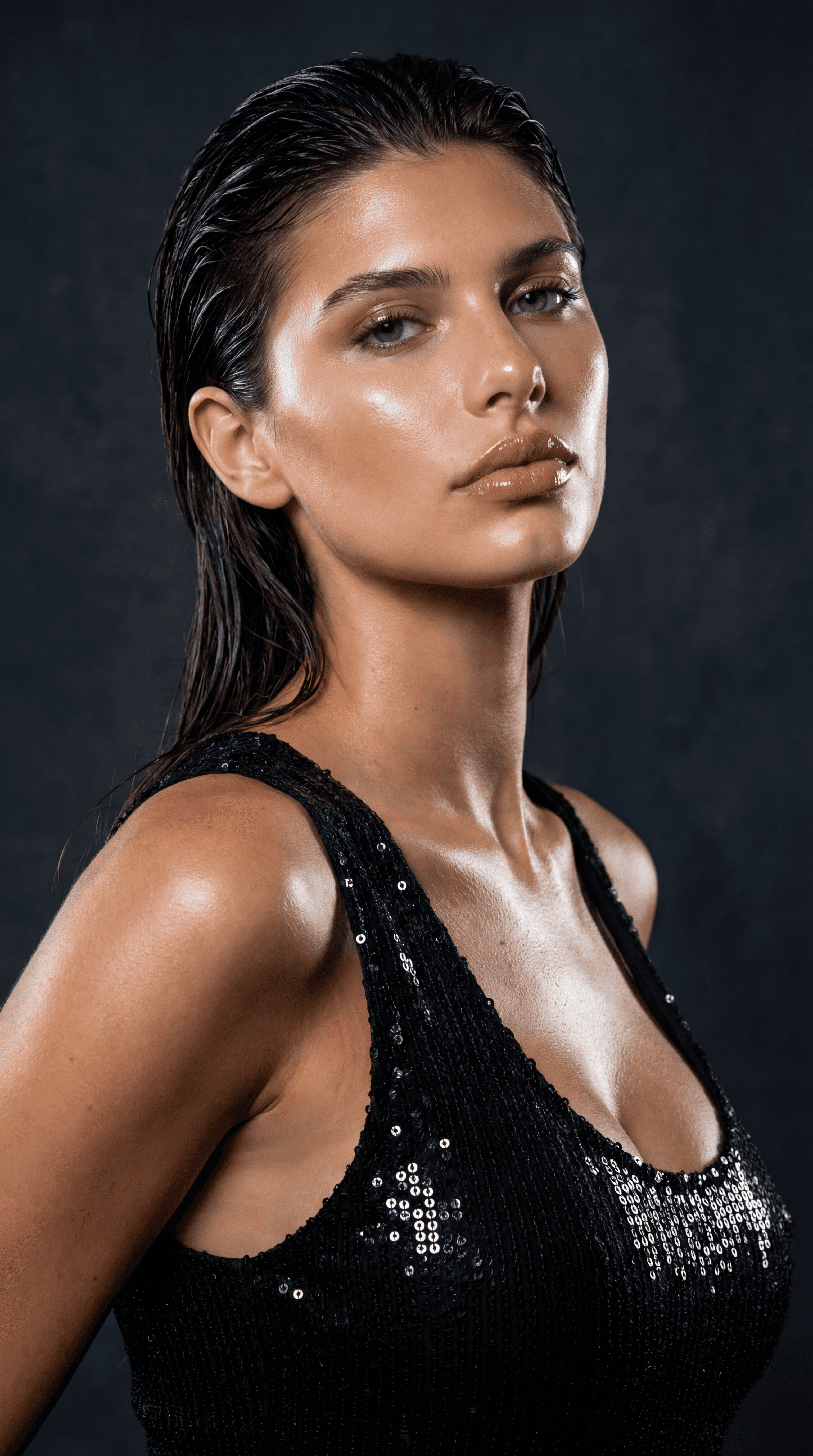

Cat shows how a synthetic persona can move between a polished beauty portrait and a backstage-style scene. Neither image proves product efficacy, genuine experience, or campaign ROI.
Published September 5, 2026. Evidence type: internal concept case study. Method: editorial review of two selected public images and the portfolio’s stated scope. This is not a paid client result, a product-efficacy study, or an independent evaluation.
The case in one minute
Catalina “Cat” Montes is a synthetic persona developed by 404 Models for fashion and lifestyle storytelling. This case examines the beauty-facing part of that direction: one close portrait and one makeup-preparation concept. The images demonstrate an art-direction idea. They cannot establish that a cosmetic works, that a real person used it, or that the concept generated profitable demand.
Why this concept needs a different review
Beauty creative often invites a viewer to infer a product result from skin, texture, shine, or the appearance of a finished look. That makes the boundary between illustration and evidence especially important. Our review therefore focuses on what the image communicates and what a brand would need to substantiate before attaching a product or a testimonial to it. We did not review a cosmetic formulation, claims dossier, clinical study, or commissioned campaign.
Evidence 1: the close beauty portrait
The first selected image shows a close crop, slicked-back dark hair, visible skin highlights, and dark clothing against a subdued background. The composition gives facial styling and light most of the attention. It is an inspectable reference for a beauty identity, not a before-and-after result or a record of someone’s skin.
For a brand brief, separate the lighting treatment from the product promise. Specify whether the final asset is a clearly labeled concept, a shade illustration, or an advertisement with a defined claim. A synthetic face should not be asked to provide an invented account of personal product use. Any efficacy claim needs its own appropriate evidence; the image cannot supply it.
Evidence 2: the preparation scene
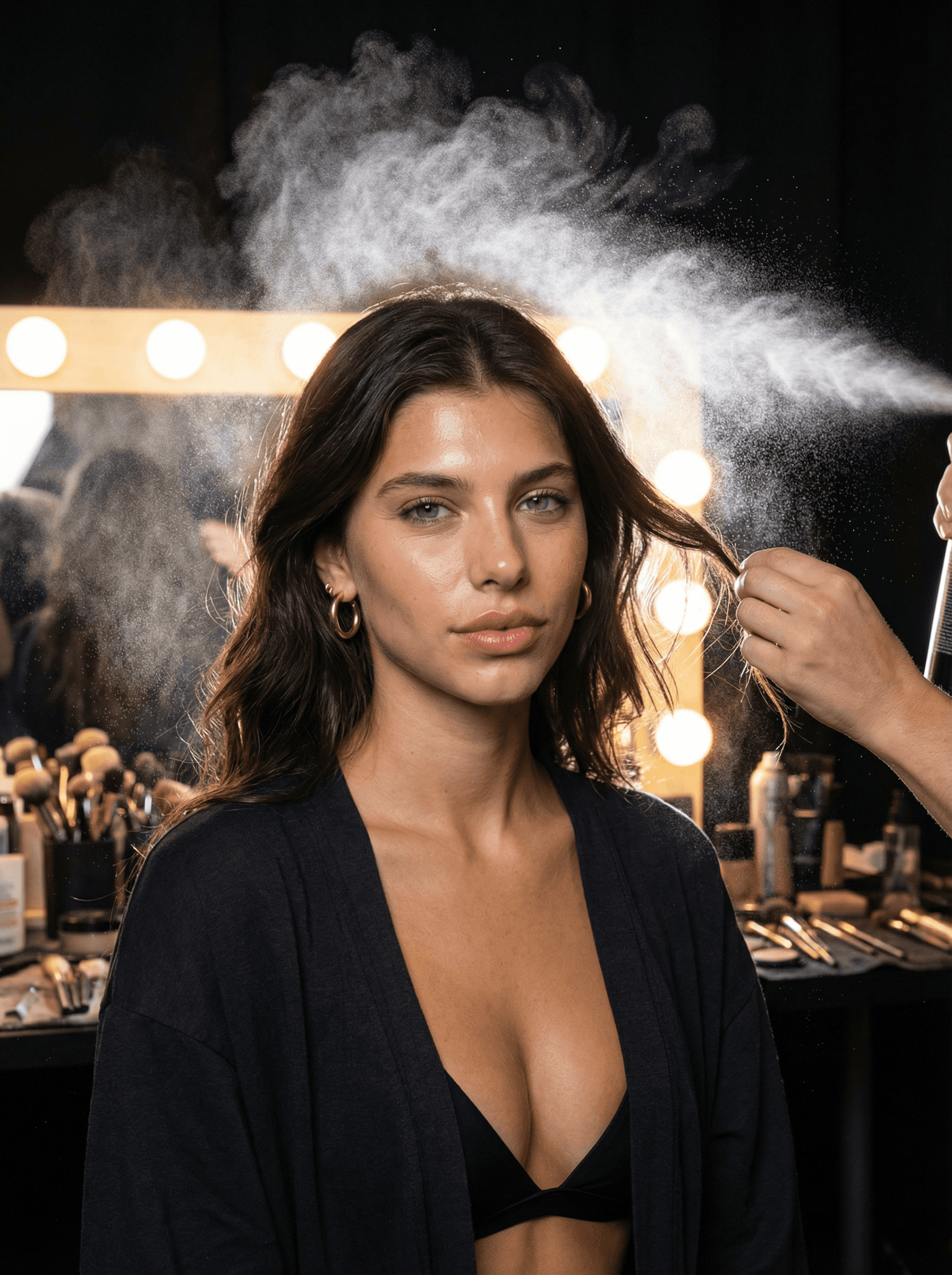
The second selected image depicts Cat in a makeup-preparation setting with tools, a mirror, and a styling interaction. Compared with the close portrait, this adds a process narrative. That narrative is exactly why the caption and surrounding page matter: an audience could otherwise mistake a staged synthetic scene for documentary behind-the-scenes evidence.
Our editorial recommendation is to describe the scene as a synthetic concept wherever the context could imply a real shoot. This is a creative-transparency recommendation, not a claim that one universal label satisfies every law and platform. Review synthetic-media disclosure and any commercial relationship separately.
Read the source-backed disclosure guide
Observed evidence and its limits
On September 5, Cat’s public CMS record contained two main images and seven gallery entries, excluding its archive preview. This case study visually reviews only the two main images. Seven gallery entries is a content-inventory count, not a pass rate, a test sample, or an endorsement of the remaining images. The public page identifies Cat as a synthetic AI influencer.
No measured audience growth, conversion rate, retention, production savings, or revenue is reported. We do not have an all-output generation log or a matched comparison against human creative for this case. Different lighting and framing across the selected pictures prevent a controlled consistency conclusion. These limits should remain visible when the work is shared outside the website.
A product-fidelity pilot a beauty team can commission
Start with one approved package reference and one narrowly defined communication task, such as a launch announcement without an efficacy claim. Our proposed starter matrix is two crops, two lighting conditions, and two product placements, with two outputs per combination: 16 outputs. This is a proposed production exercise, not a completed experiment or a statistically powered audience study.
Score package shape, label text, color, hand interaction, identity, and scene plausibility independently. Retain failed outputs and record repairs. Require the brand’s product owner to inspect fidelity, the creative owner to inspect identity, and the designated claims reviewer to inspect captions and implied promises. A visually polished asset with the wrong package or an unsupported claim should not ship.
Keep a claim ledger alongside the asset log: asset identifier, exact claim or implication, supporting material, approving owner, market, channel, disclosure decision, and approval date. A synthetic-media label is not a substitute for product substantiation, and a product-claims approval is not a substitute for checking the image’s synthetic context.
Use the beauty and wellness claims guide
From a visual concept to a measurable decision
The next commercial question is not whether Cat looks convincing in isolation. It is whether approved creative improves a predefined outcome at an acceptable total cost and risk. Compare against the brand’s existing creative using equivalent offers and audiences, record production and media costs, and choose the measurement window before launch. Customer outcomes can be added only when a real campaign is completed and its data are approved for publication.
Sources and review boundary
Primary material: the Cat portfolio, its two main source images, and the public-facing CMS asset inventory reviewed September 5, 2026. This is first-party editorial analysis by the creator of the concept. The review contains no commissioned customer result, independent clinical evidence, or forecast of campaign performance. All pilot steps are recommendations for future work.
Compare the Luna fashion concept case study


More AI influencer research.
Source-backed guidance on brand-owned AI influencers, synthetic media governance, creative testing, and measurement.